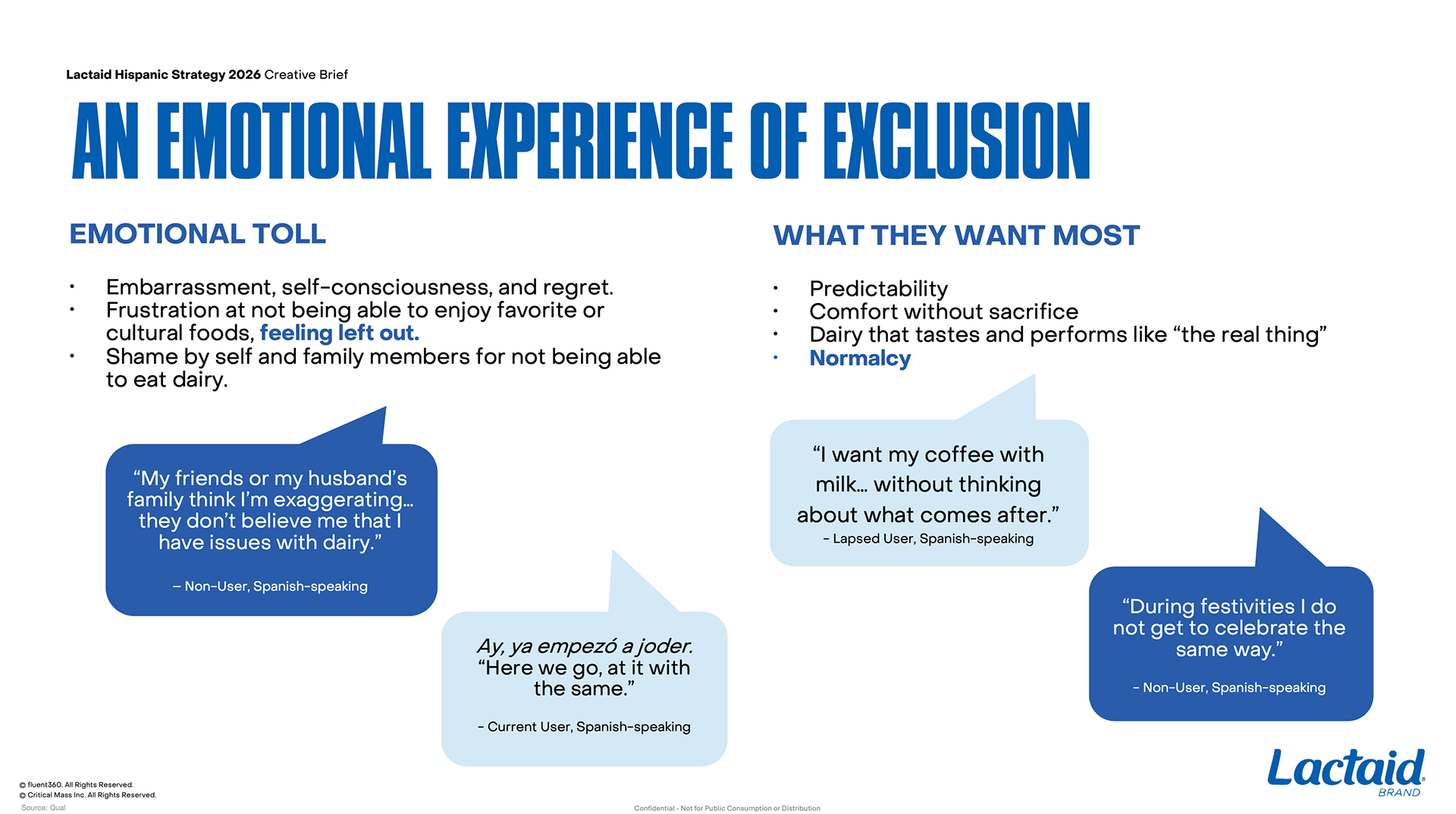
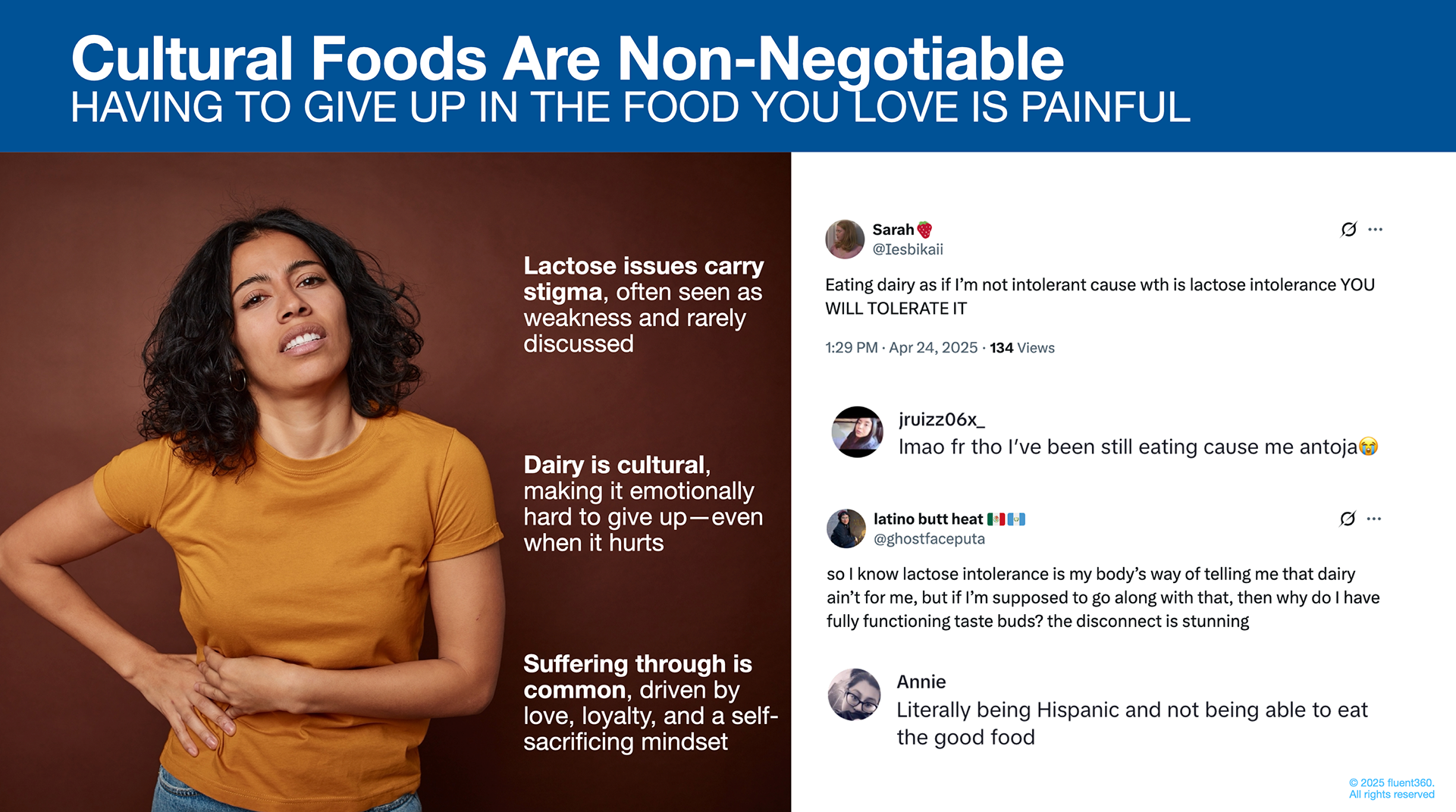
Tension: Lactaid had a Hispanic opportunity it wasn't fully pursuing. The brand over-indexed among acculturated Hispanics — a strong foundation — but left a much larger segment of bicultural and Spanish-dominant consumers underserved. The category's default strategy was functional: avoid discomfort. But for Hispanic consumers, dairy isn't just a food. It's café con leche with your grandmother. It's arroz con leche at a quinceañera. It's the one thing you silently stop eating at family gatherings while everyone else carries on. Lactose intolerance wasn't just a digestive issue — it was a slow, quiet exclusion from the moments that matter most.
How I looked at it: Through qualitative research, I surfaced the emotional architecture beneath the functional category: how lactose intolerance creates shame and social pressure within family settings, how Spanish-dominant consumers were far less aware of Lactaid's full product portfolio, and how the emotional experience of lactose intolerance is fundamentally different based on acculturation level. I also drew on my own cultural knowledge as a Mexican American to pressure-test insights and ensure the brief wouldn't read as outsider translation.
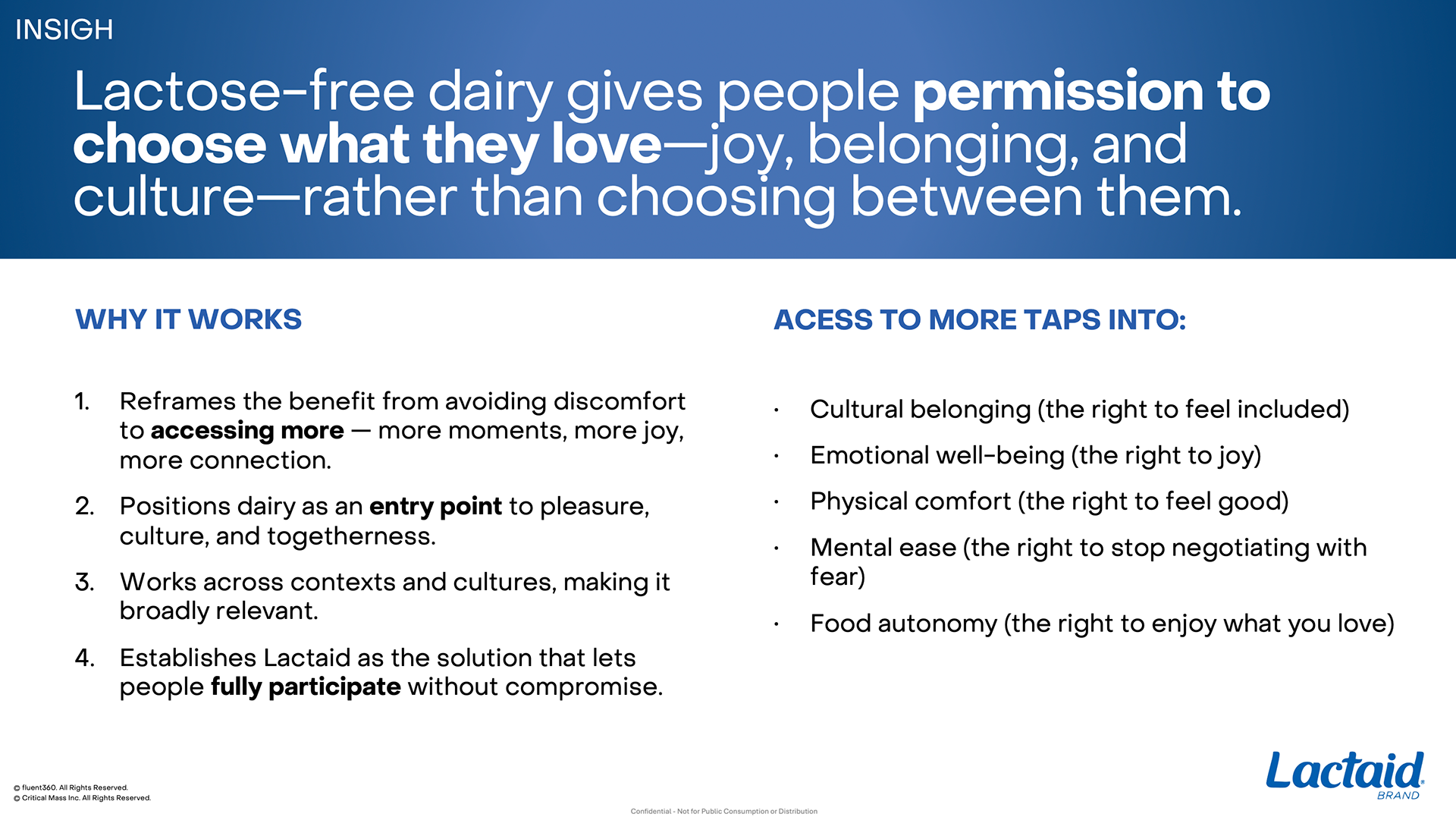
What I found: For Latino consumers, lactose intolerance doesn't just interrupt digestion — it interrupts belonging. What's at stake isn't physical comfort. It's the right to fully participate in the cultural rituals that make them feel whole. The most powerful thing Lactaid can do isn't offer a workaround. It permits people to say yes again.
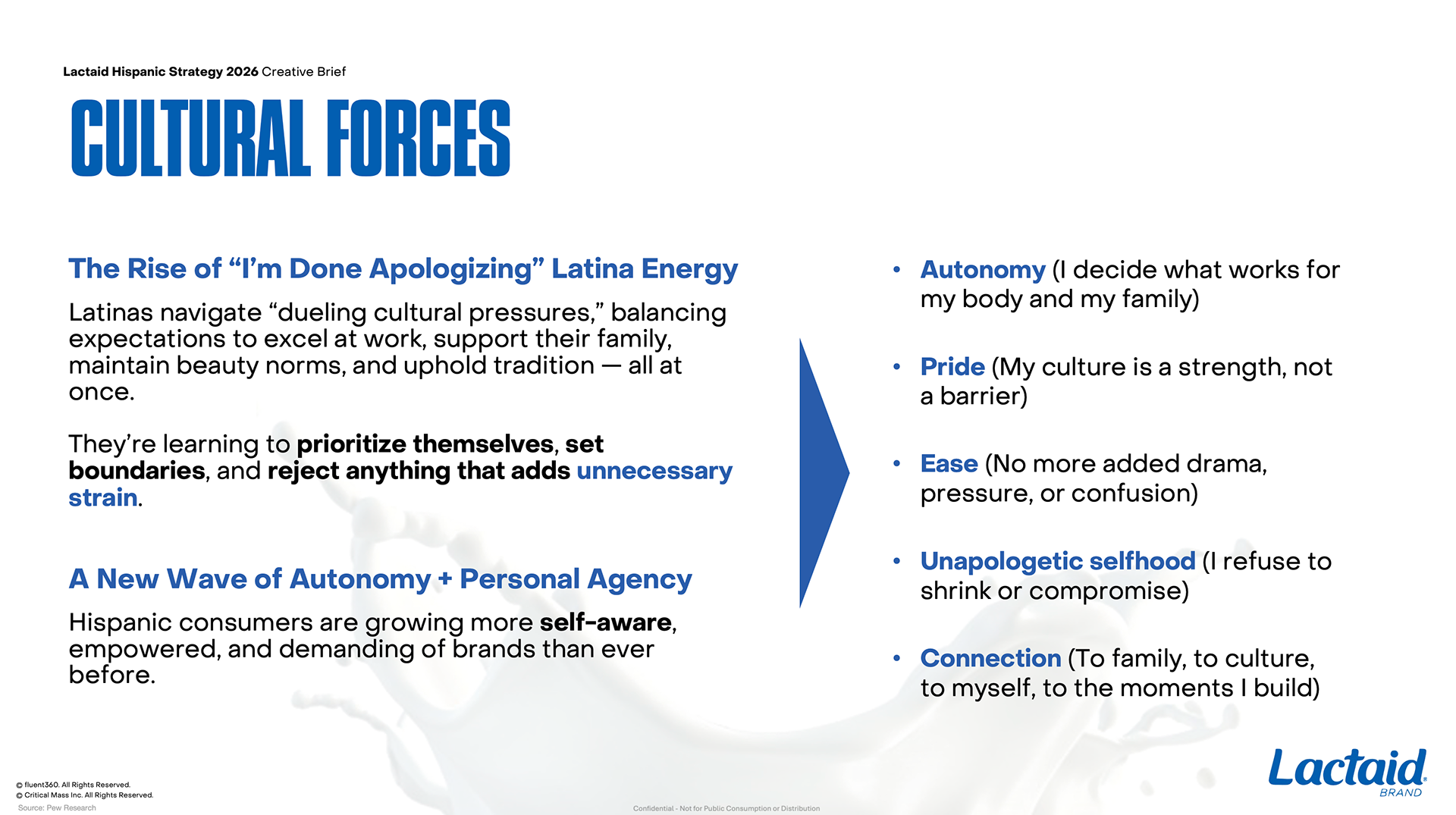
What I made from it: The brief reframed Lactaid's Hispanic proposition from functional relief to cultural restoration. The strategic platform — "Access to More" — shifted the benefit from avoiding discomfort to reclaiming joy, belonging, and cultural participation. I built a target persona (Elena: bicultural, bilingual, the family's emotional center, navigating "dueling cultural pressures") that gave the creative team a real person to write for, not a demographic. The brief also identified a critical audience segmentation insight: Bicultural Hispanics are the growth unlock — the segment that influences Spanish-dominant households while being reachable through bilingual communications.
What happened: What began as a plan to reach a segment became a genuine cultural strategy with a consumer at its center and a business case grounded in data: Bicultural Hispanics represent 20.8M adults and are the largest, fastest-growing Hispanic identity segment.
* Creative currently in development, Summer 2026
* Creative currently in development, Summer 2026
Role: Associate Strategy Director