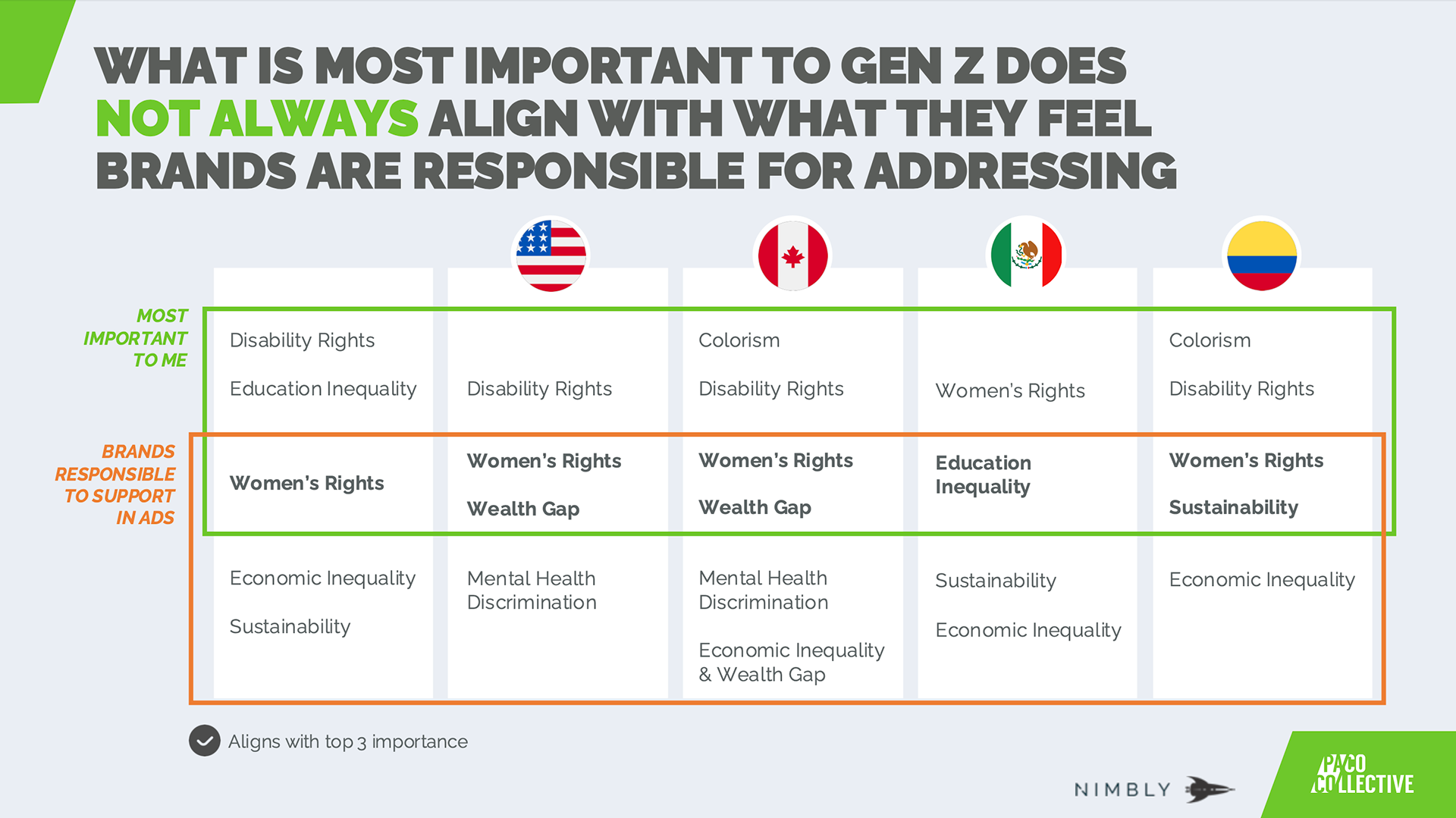
Tension: By 2025, "DEI" had become politically radioactive. Brands were retreating, rebranding, or going silent — often based on fear of backlash rather than understanding of what their audiences actually wanted. The marketing industry was making sweeping decisions about inclusion without asking the most important question: what does inclusion actually mean to Gen Z, and does that meaning change depending on where they live? Without that answer, brands were either pandering or abandoning — both losing positions.
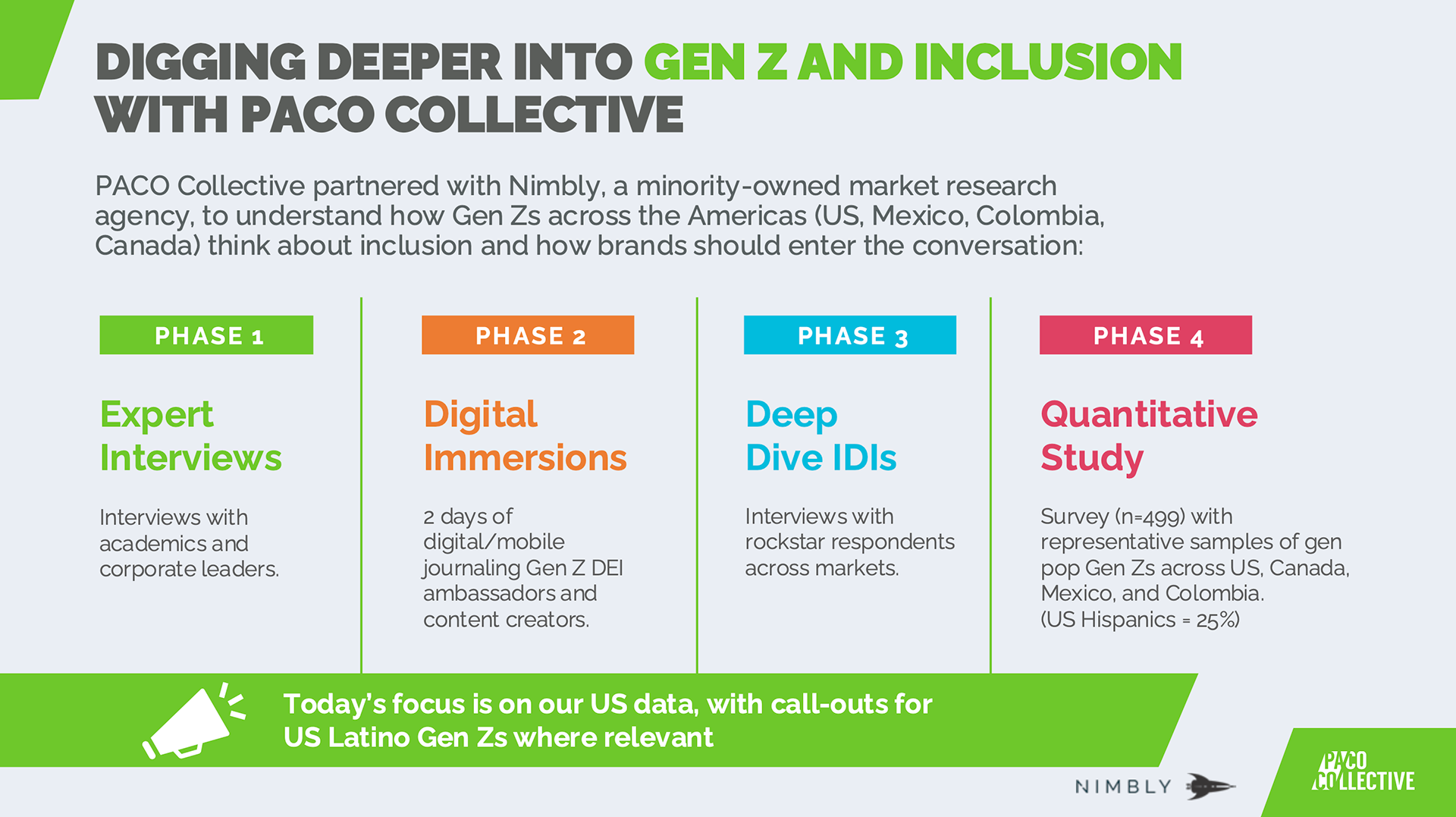
How I looked at it: I co-designed a four-phase, cross-cultural research system in partnership with Nimbly, a minority-owned research agency — built to surface nuance that single-market surveys consistently miss. The methodology moved from expert grounding to behavioral immersion to depth to scale: expert interviews with academics and corporate leaders; two-day digital journaling with Gen Z DEI ambassadors and content creators; deep-dive in-depth interviews with rockstar respondents; and a quantitative survey of 499 Gen Zs across the US, Canada, Mexico, and Colombia. The research was designed not just to describe Gen Z's views on inclusion, but to segment them by behavior — and to map how those views diverge and converge across national and cultural contexts.
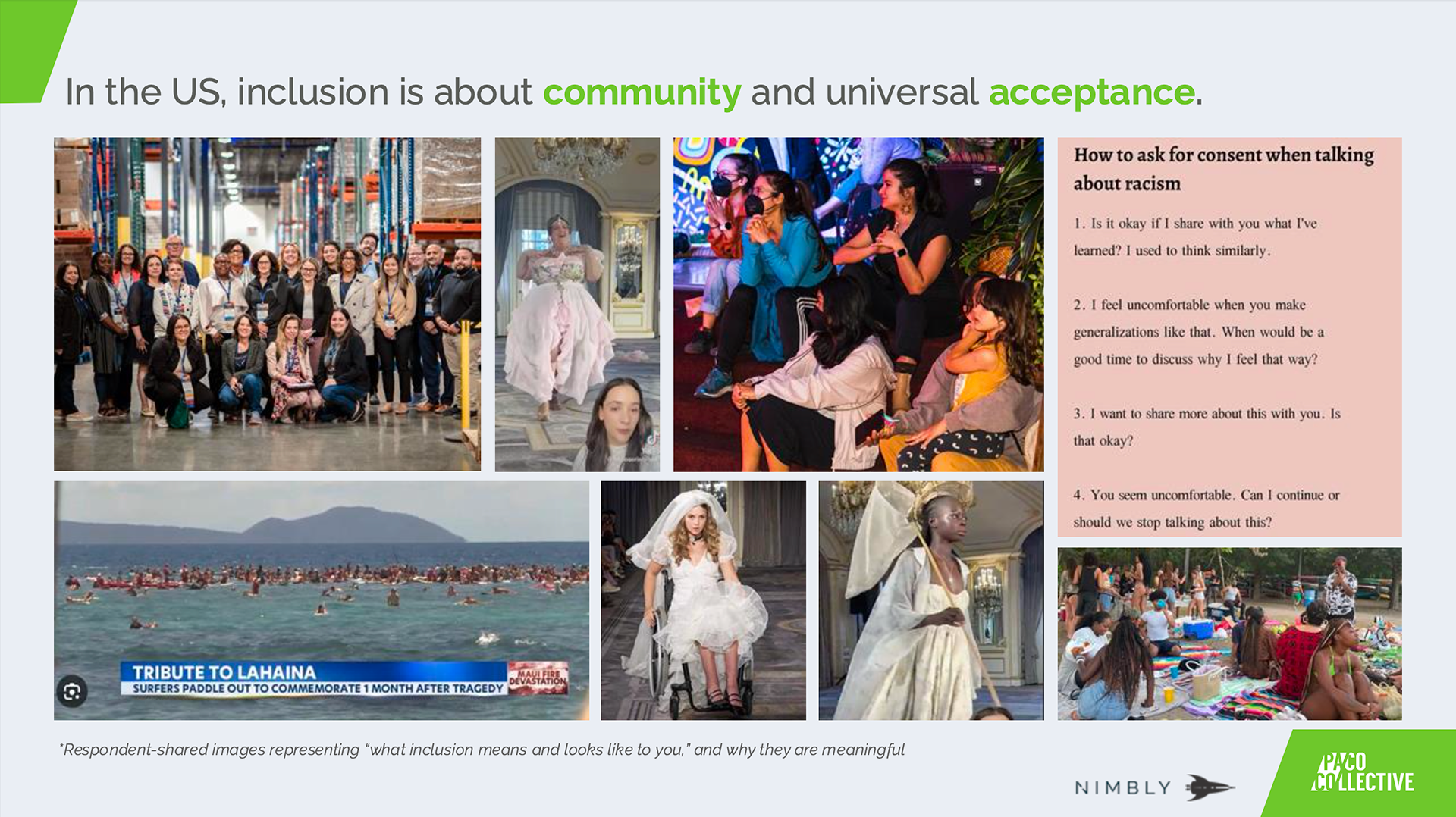
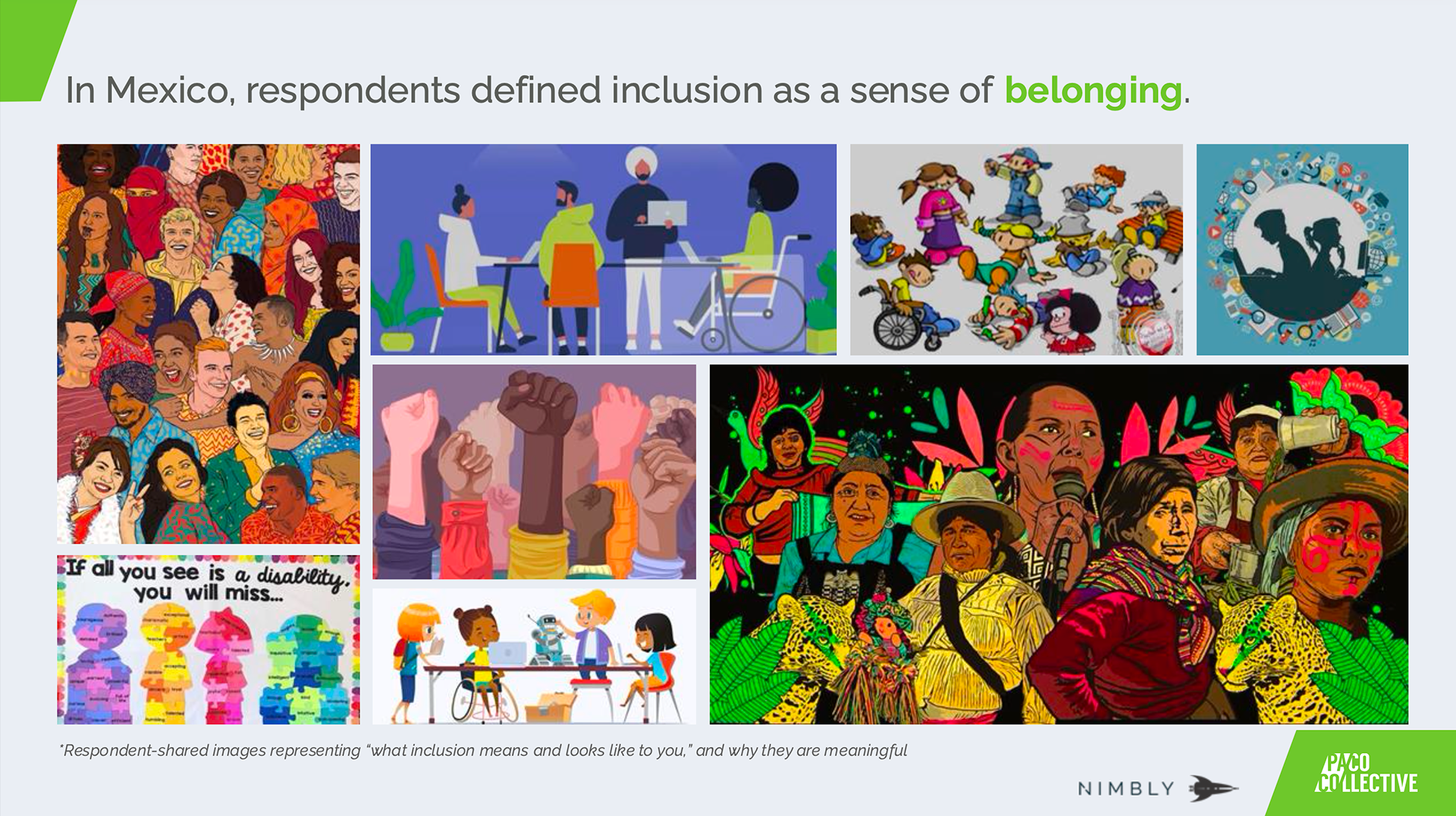
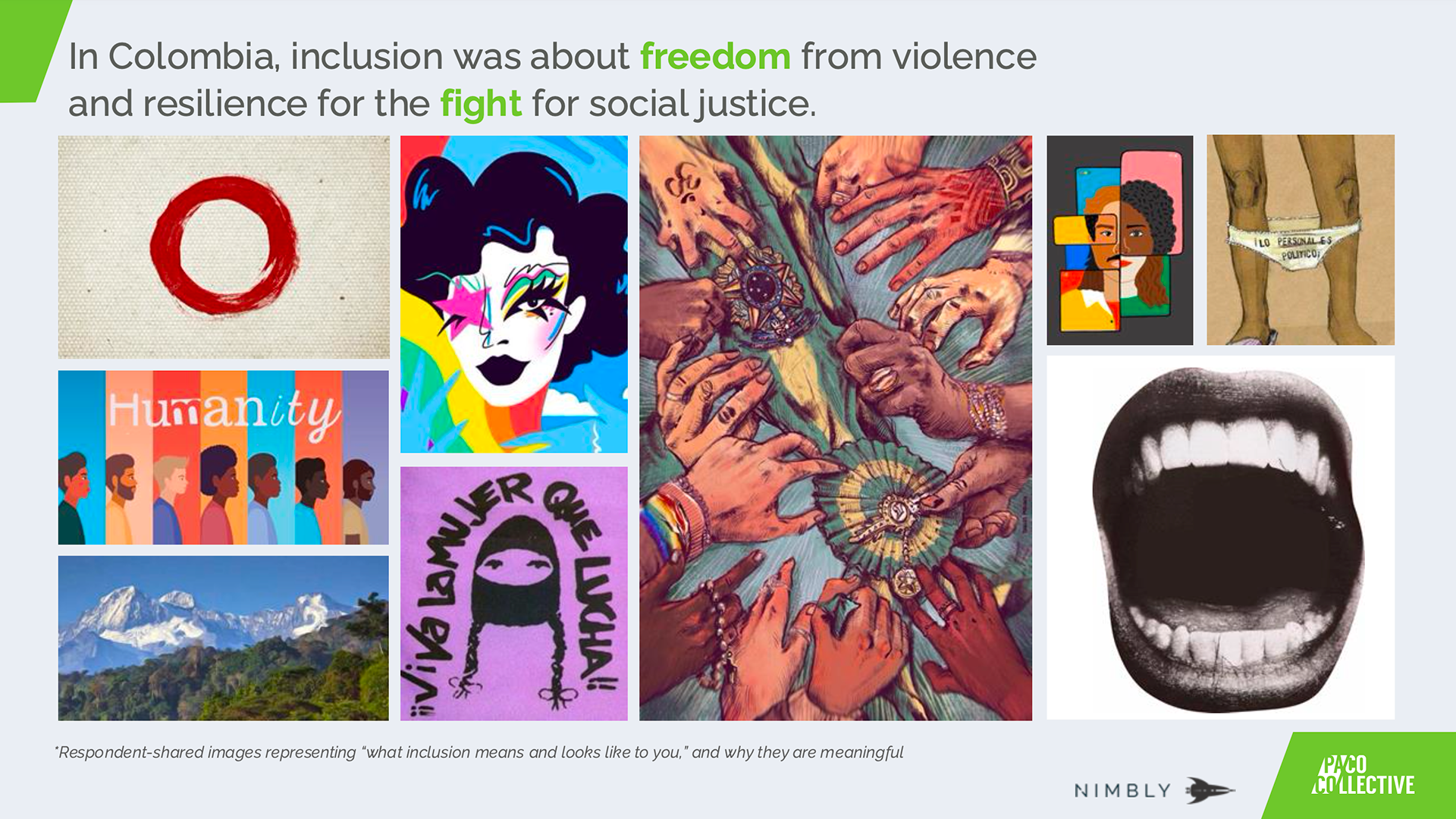
What I found: Inclusion isn't universal — it's contextual. What it means to belong, to be seen, and to be represented is shaped by national history, cultural memory, and lived reality. A brand that treats inclusion as one global message will always feel hollow to someone.
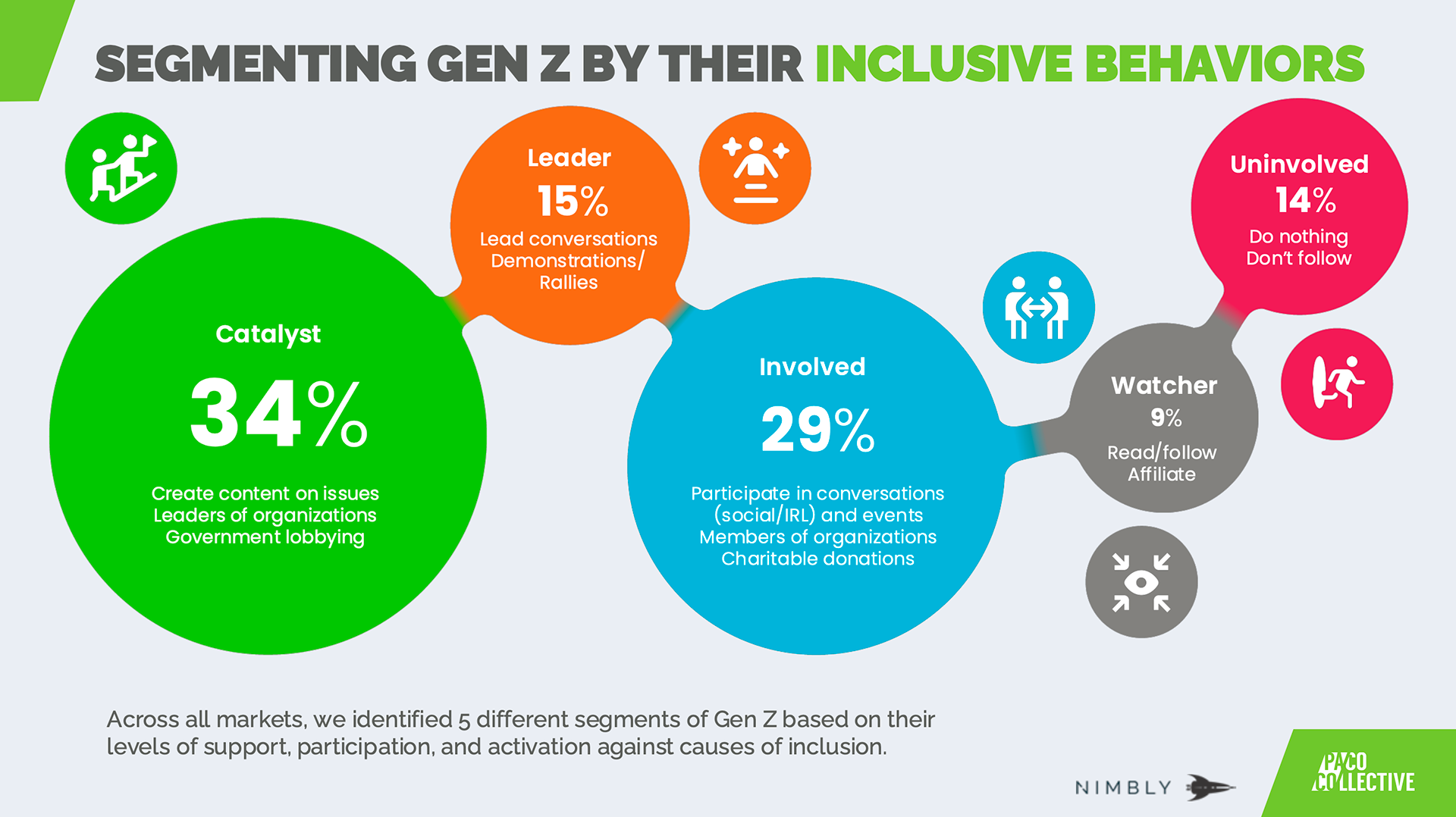
What I made from it: The research produced a behavioral segmentation model — five Gen Z segments mapped by their level of inclusion activism, from Uninvolved to Catalyst — and a strategic framework for how brands should engage each. The "Equity Tastemakers" segment (Catalysts + Leaders, 49% of US Gen Z) became the primary target lens: highly activated, deeply skeptical of corporate DEI theater, and intensely responsive to specific stories over mass representation. The framework gave marketers five concrete shifts: from pandering to teaching, from mass representation to specific stories, from aspirational to realistic, from insularity to community co-creation, and from inclusive marketing to inclusive organizations.
What happened: The report became a credibility and business development asset for PACO Collective — positioning the agency as a research-grounded voice on multicultural strategy at a moment when most brands were flying blind on inclusion. Key findings reframed how clients approached the category: tokenistic broad representation was shown to decrease purchase intent by 8% (13% among US Latino Gen Z), while authentic cause-aligned storytelling increased it by up to 48%.